Staff Reports
In a recent ruling, the Supreme Court has taken a significant step that may alter the trajectory of American trade policy. This decision, which struck down most of the tariffs imposed by President Donald Trump under the emergency powers law, has sent ripples through economic discussions and sparked debates about executive authority and the role of government. While the ruling may appear to be a legal technicality, it carries profound implications that echo through history, highlighting the delicate balance between power and responsibility within our democratic framework.
The ruling, crafted by Chief Justice John Roberts and supported by a coalition of justices from both sides of the ideological spectrum, affirmed that the Executive branch cannot unilaterally impose tariffs as it sees fit. The justices pointed to the International Emergency Economic Powers Act of 1977, underscoring that Congress has not granted such sweeping authority for tariff implementation. This marks a pivotal moment, as it signals a rejection of the aggressive trade measures that have come to define Trump’s administration, bringing to the forefront questions about the power dynamics between the branches of government.
This decision resonates with past events in American history where executive overreach was challenged. From the Alien and Sedition Acts of 1798, which sought to suppress dissent against the government, to the more recent controversies surrounding executive orders, the principle that no one branch of government should wield unchecked power remains a cornerstone of American democracy. This ruling serves as a reminder that checks and balances are not just a theoretical concept but a necessary practice to safeguard individual liberties and promote accountability.
The economic implications of this ruling are likely to be extensive. With the potential for refunds amounting to billions and fluctuating market reactions, it raises the question of how policy impacts everyday Americans. Particularly in times when inflation concerns and economic uncertainty loom large, the consequences of trade policies can directly influence the cost of living. Economically, this ruling symbolizes a shift toward reevaluating the efficacy and necessity of protectionist measures. It invites a broader conversation about how the United States should engage with global markets and the responsibilities that accompany such decisions.
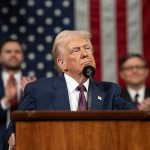
As the political landscape evolves, the forthcoming State of the Union address offers an opportunity for reflection. It remains to be seen how the current administration will navigate this setback and whether it will embrace the ruling as a means to recalibrate its approach to trade and tariffs. The call for unity and action in the face of this challenge is essential. American leaders must summon the resolve to prioritize the nation’s well-being over partisan squabbles, as the historical lessons remind us that the strength of the republic lies in its ability to adapt and respond to changing circumstances while preserving its foundational values.
The Supreme Court’s decision serves not just as a legal judgment but as a clarion call for a return to thoughtful governance. It is a poignant reminder that the path forward must be anchored in principles of justice, accountability, and a keen duty to the American people. As legislators and citizens alike confront the implications of this ruling, they are inspired to engage in meaningful dialogue about what it means to truly support a flourishing democracy—one that balances power and upholds the responsibilities entrusted to its leaders. The course ahead will require not only a reevaluation of trade policies but also a commitment to the enduring values that define the American experience.