Staff Reports
President Trump’s latest attempt to whip a faction of House Republicans into shape resembles more of a cat herding exercise than a legislative strategy. Despite his efforts to sway the skeptics regarding the Senate’s budget changes, a significant bump in the road remains, and it’s one that might just bring the whole project to a screeching halt.
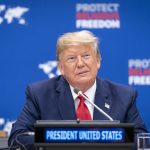
Trump met with some of the GOP holdouts to discuss the budget, which was due for a vote but was lagging behind in support. House GOP leaders are well aware that their margin for error is razor-thin; they can afford to lose no more than three votes, and yet more than that number continue to stiff-arm the President’s proposals. Apparently, some members haven’t caught on that the real dollars and sense aren’t just about the numbers on a spreadsheet; it’s about demonstrating fiscal responsibility.
Critics within the GOP were quick to point out that the Senate’s lowered spending cut threshold of $4 billion looks a bit pale when compared to the $1.5 trillion that House committees were working with. It’s like bringing a rubber knife to a gunfight—any real fiscal hawk knows that any plan leaving this level of funding unaddressed isn’t truly a plan at all. In a world where fiscal cliffs are commonplace, calling for cuts simply doesn’t equate to the draconian measures necessary to straighten out the financial chaos in Washington.
After the meeting, Trump took to social media to reaffirm his support for significant spending cuts, ideally exceeding $1 trillion. Yet, it seems his talk didn’t translate into guaranteed votes. Several Republican representatives have begun voicing their skepticism, wondering what kind of actual commitment can be expected from the Senate. More than a few are hesitant to move forward without concrete plans instead of just the usual ‘trust us’ rhetoric.
Trump sways some holdouts but House GOP opposition still big enough to block budgethttps://t.co/LdISQxLw7K pic.twitter.com/vOZbyWFJFA
— The Washington Times (@WashTimes) April 9, 2025
While some House members changed their minds after Trump’s appeals, the dissenters aren’t backing down. They demand specifics—literal outlines of spending cuts, not just abstract promises. The frustration was evident, as one representative implored that they need assurances to avoid voting on a plan filled with speculative commitments, hogwash that doesn’t match the party’s fiscal conservatism.
The tensions illustrate a broader issue about party unity and trust between lawmakers. As some House members ponder the Senate’s willingness to follow through on any spending cuts, it all begins to look like a game of legislative chicken. While Speaker Mike Johnson highlights Trump’s role in shifting opinions, he’s also stuck acknowledging the deep fissures in the party. With the Senate and the House speaking what seems to be different languages, many within the GOP are left unsure if any meaningful budget changes will ever see the light of day.
As the showdown looms, it becomes more apparent that the infighting is only poised to grow. Members of the Freedom Caucus, staunch in their beliefs, stand ground against what they see as a deeply flawed plan. A few even boldly stated that the Senate’s credibility is under suspicion—what good are promises from a group that has proven less than trustworthy in the past? As for the GOP leaders, it appears they may need more than just the charisma of a former president; they may need some serious grounding in common-sense economics to get their party back in line.