

 admin
Something important broke inside America’s nerve center for secrets — and the people in charge are telling us it was just routine maintenance. That explanation is simple enough on its face, but simple answers don’t always satisfy when classified comms go dark and analysts can’t do their jobs.
What went wrong at NSANet?
The National Security Agency reports a “temporary degradation during scheduled routine maintenance” on its classified internal communications network — the systems insiders call NSANet. Technicians pushed patches or upgrades and some internal services and regional support nodes slowed or stopped, forcing the agency to limit on‑site staffing and route around affected workflows. Mission‑critical capabilities, they say, kept running, but routine classified communications — the stuff analysts use every day to move intelligence — was hamstrung until systems were restored.
Officials insist it wasn’t a cyberattack
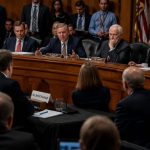
Director of National Intelligence Jay Clayton, Homeland Security Secretary Markwayne Mullin, and FBI Deputy Director Christopher Raia all told Congress that investigators have found no evidence of a coordinated or state‑sponsored attack. That’s reassuring, at least on its face, but it’s not the end of the story: lawmakers are demanding vendor logs and a full technical post‑mortem so we can know whether a bad patch, a supply‑chain quirk, or human error caused the disruption. Ordinary Americans don’t care whether we call it a glitch or an incident if the end result is slower intelligence feeds and delayed decisions that can affect operations overseas or border security at home.
Why this matters to working Americans
This outage didn’t happen in a vacuum — it arrived amid a cluster of high‑profile service failures across government and private industry, from air‑traffic control headaches to cloud provider outages. When core systems wobble at once, the risk isn’t just headlines; it’s flights delayed, markets jittery, and, yes, the possibility that the people who rely on real‑time classified communications to protect Americans have to improvise. That improvisation has a cost: slower reaction times, more manual work, and a bigger margin for human error at a moment when adversaries watch for any weakness.
What comes next — and who will be held to account?
Congress should get the vendor‑level timelines, redacted change logs, and a technical after‑action report that tells the public what was patched, why it failed, and how it won’t happen again. The NSA and contractors owe taxpayers more than a reassuring statement; they owe a forensic accounting of the root cause and a plan for accountability. If the answer is truly routine maintenance, fine — explain it in technical detail and move on. If not, we deserve to know who made the call that left classified comms degraded and why that call was trusted over common sense.
We can accept that machines fail. We should not accept that secrecy hides preventable mistakes. Who will pry loose the logs and publish the truth — for the good of national security and the peace of mind of ordinary Americans?