admin
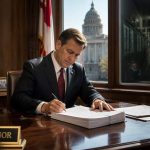
President Trump this week stood in the Oval Office and signed a proclamation declaring the Oval Office and the Cabinet Room a national monument. He said the rooms “will not be allowed to be touched by anybody.” The move is meant to lock in his redesign of those rooms as a permanent part of the White House. The action is bold, headline-grabbing, and raises big legal questions about presidential power and how far a president can go to freeze his own legacy.
What the proclamation actually does
The proclamation aims to make the Oval Office and Cabinet Room federal national monuments. That would, in theory, put the rooms under protections meant to preserve historic places. For supporters, this is a way to protect a president’s taste and legacy. For critics, it looks like an attempt to turn personal decoration choices into permanent policy. Either way, the “Oval Office national monument” announcement is a new and concrete step — not a vague promise — and it demands a legal and political answer.
The Antiquities Act and presidential power
Most people know presidents can create national monuments under the Antiquities Act. But that law has usually been used for parks, archaeological sites, and public lands — not the inside of the White House. That makes this proclamation unusual. The question is simple: does the Antiquities Act, or any other law, let a president lock down rooms inside the residence and workplace of future presidents? Legal scholars and judges will likely have a lot to say about that, and a court fight would not be surprising.
Practical problems and political theater
Beyond the legal issues are the practical ones. Who manages a national monument that sits inside an active seat of government? Who pays to maintain it? Can a future president walk in and change the curtains? The reality is that proclamations can be challenged, reversed, or ignored. Congress controls budgets and property law. Future presidents can assert executive control. So while this proclamation looks airtight on camera, it may prove more symbolic than permanent. Still, symbols matter in politics — and this one is loud.
If Republicans want to preserve this redesign legitimately, the proper route is simple: pass a law or secure long-term agreement through the usual channels, not theater. But if this is mainly a stunt to headline-boost and energize a base, expect lawsuits and plenty of wasted ink. Either way, the Oval Office national monument fight will force a clear question: are we preserving history, or are we writing temporary vanity into law? Conservatives who value both legacy and rule of law should demand a clear answer — not just another photo op with gilded drapes.