admin
admin
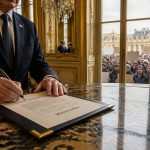
The White House released the text and said it had electronically signed a 14‑point Memorandum of Understanding with Iran. President Donald Trump even held up a signed copy at a Versailles dinner, and U.S. officials read the document aloud for reporters. On paper it promises a ceasefire and a 60‑day window to finish a final deal. In practice, this feels like a fast handoff of leverage to Tehran with too many key questions left for later.
What the 14‑point MOU actually says
The memorandum declares an immediate halt to military operations, reopens the Strait of Hormuz to commercial traffic, allows waivers so Iranian oil can flow, and sets a “minimum methodology” to down‑blend highly enriched uranium under IAEA supervision. It also talks about an economic reconstruction plan with “at least $300 billion” and says a final, binding treaty would be negotiated in 60 days and endorsed at the U.N. Security Council. That is a lot of important stuff shoved into a short political framework while the real mechanics — sequencing, verification, who pays and when — are punted to follow‑on talks.
Why conservatives — and Israel — should be alarmed
Call it swing‑state diplomacy: stop the shooting now, deal with the hard parts later. Sounds hopeful, until you read the fine print. Letting Iranian oil back on the market and promising huge reconstruction money before ironclad verification is in place hands Tehran immediate revenue and political legitimacy. The MOU also bars the use of force “on all fronts,” including Lebanon — language that has Israel and its leaders calling foul. If the price of a pause in fighting is tying Israel’s hands and giving Iran cash first, conservatives should be very skeptical, not relieved.
Who pays, who signs, and who watches the books?
The “at least $300 billion” line is the one that will keep budget hawks up at night. Administration officials insist the financing will come from regional partners and private investors, not direct U.S. taxpayer checks. Fine — but show us the contracts, the backers, and the conditional release rules. Treasury waivers that let oil flow need clear sequencing tied to verified nuclear steps. And Congress must get full briefings from Secretary of State Marco Rubio and other officials before any waivers or asset moves. Promises from anonymous private financiers don’t pass muster in a republic that still has an appropriation process.
What Washington must demand next
If this MOU is going to be more than a pause that benefits Iran, Washington must insist on ironclad sequencing: verified IAEA down‑blending and inspections first, sanctions relief only after on‑site verification, and airtight conditionality on reconstruction funds. Bring Israel and Gulf partners into the room — not after the fact, but as active participants. Congress should exercise its oversight powers and require written, actionable benchmarks before any assets are unfrozen or waivers issued. This is a test of whether the MOU produces lasting security or simply buys time for Tehran to regroup.
The administration talks about “major wins” and avoiding a worldwide economic shock. De‑escalation can be a win. But a deal that looks like surrender at first blush and leaves verification and sequencing to guesswork is a gamble we can’t afford. If President Donald Trump and his team want credit for peace, they’ll prove it with checks, inspections, and results — not with a photo op and a promise that “we’ll work out the details later.”