admin
admin
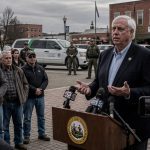
Vice President JD Vance stood on the Gulf Coast this week and sold a straightforward pitch: America is serious about rebuilding the kind of industrial muscle that keeps enemies honest and cities humming. The stage was a dusty stretch of the Port of Brownsville, the project is called Port Alpha, and the promise is big — a new shipyard for autonomous and crewed vessels that backers say will pump billions and thousands of jobs into a region that badly needs them.
What happened in Brownsville
At the groundbreaking for Saronic Technologies’ Port Alpha, Vice President JD Vance joined Governor Greg Abbott and Saronic co‑founder and CEO Dino Mavrookas to clap for a roughly $3.2 billion investment on some 800‑plus acres. The company — an Austin‑based builder of autonomy‑capable surface vessels like the Corsair and Marauder — is pitching a shipyard that could scale to produce medium and large vessels and, they say, create up to 10,000 direct jobs.
That’s the shorthand version everyone’s repeating: re‑shoring defense manufacturing, ramping US shipbuilding capacity, and fielding software‑defined ships for a Navy that’s already paying attention. It’s a tidy message, and in campaign seasons tidy messages travel fast.
Why Saronic matters — and why this isn’t just a local brag
Autonomous maritime technology isn’t sci‑fi anymore; it’s hardware the Navy is experimenting with and companies like Saronic are turning into production lines. If the Port Alpha yard really delivers, it would be a rare thing: new American industrial capacity in a sector where much was ceded overseas after the Cold War.
That matters to small towns and big strategy alike. For workers in Brownsville, it’s a potential payday and career pathway. For national security, it’s the difference between buying ships from allies and buying them from partners who can’t be cut off in a crisis.
The catch: incentives, timelines, and the need for teeth
Talk is cheap; concrete costs money. Local officials have dangled tax breaks and incentives to land Port Alpha, and Cameron County paperwork will need scrutiny — how much public money, what guarantees, and what happens if promised jobs falter? Earlier this year the schedule looked shakier than the podium suggested: an August White House visit was reportedly canceled, only for a formal groundbreaking to be staged later with Vance in attendance.
Big numbers — $3.2 billion, 10,000 jobs — are useful for headlines. They’re not a substitute for deadlines, audited milestones, and enforceable clawbacks. If taxpayers are underwriting heavy lifting at the Port of Brownsville, local families deserve contracts and timelines, not warm speeches and wishful thinking.
What ordinary Americans should watch for next
Pay attention to the plain details: the White House readout and Saronic’s contracts, the Navy award notices that show real procurement, and the county incentive documents that pin down who pays if the project stalls. If the yard delivers, it’ll mean real wages, supply‑chain jobs, and a stronger industrial base — things that make small towns breathe easier and make the country safer.
If it doesn’t, it’ll be another lesson in how pretty press events can paper over gaps between promises and production. So are we finally building steel and ships again, or just building photo ops and press releases? Which one do you want your tax dollars to bet on?