admin
admin
Congress held a simple test: should members of Congress and their families be barred from buying individual stocks? The House answered yes — but only after a messy fight that exposed both the limits of the bill and the political theater behind the “ethics reform” label. The Stop Insider Trading Act (H.R.7008) cleared the House by roll call, but the vote revealed why Washington still looks like a place that protects insiders.
What the House actually voted to do
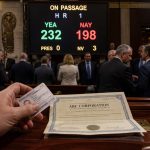
The House passed the Stop Insider Trading Act by a recorded vote of 232–198, with one member not voting. The Republican conference largely backed the measure while 13 Democrats crossed the aisle to support it. The bill bars covered individuals — members of Congress, their spouses, and dependent children — from purchasing individual securities issued by public companies. It does not force members to sell existing holdings, but it does require public notice seven to 14 days before a sale and creates penalties for violations: a fine of $2,000 or 10% of the transaction (whichever is greater), plus any net gain, and forced divestiture for illegal purchases. The rules kick in 180 days after enactment and contain carve-outs for diversified funds, certain small-business interests, dividend reinvestment, and some trusts.
Why so many Democrats voted no — and why the objections matter
Democratic opposition wasn’t a simple “we love insider trading” stance, even if critics paint it that way. Many Democrats said the bill is too weak because it allows lawmakers to keep current stock holdings and still permits sales, albeit with advance notice. They also pointed out the bill leaves out the president and vice president and complained Republicans tacked on a federal voter-ID provision. House Democrats’ ranking member on the Administration Committee called that voter-ID language a “poison pill,” and the Congressional Black Caucus called the package a “Trojan horse.” That political add-on turned what could have been a narrow, bipartisan transparency fix into a vehicle Democrats felt they couldn’t support.
Don’t be fooled: it’s still a meaningful step — and political ammunition
Even with its limits, H.R.7008 would change the game for a lot of backroom trading. Requiring advance public notice before sales gives watchdogs and voters a real window to see what lawmakers plan to unload. Sponsor Representative Bryan Steil said it plainly: stop members from trading individual stocks, full stop. Supporters argue the bill removes the appearance of wrongdoing and raises transparency. Critics can keep demanding a total divestment plan that includes the executive branch, but Americans should expect at least a basic floor of accountability from their lawmakers — not a handshake and a vague promise to behave.
What comes next and why voters should care
The bill moves to the Senate, where it faces uncertain prospects. Senate leaders haven’t signaled an appetite to take up this House vehicle as passed, especially with the voter-ID addition attached. That means H.R.7008 may stall, but the vote is still useful politically: it puts roll-call choices on public record. Voters now know which lawmakers supported a bite-sized reform and which opposed a bill that would at least limit fresh purchases of individual stocks. Call it imperfect, call it partisan theater — but either way, the swamp just got photographed. And photos travel fast come election season.