admin
admin
On September 10, 2025, conservative activist Charlie Kirk was shot and killed while speaking at Utah Valley University, an attack that stunned the nation and exposed a dangerous truth: our public spaces and political gatherings are no longer safe. The raw panic and chaos captured on campus surveillance footage showed a violent contempt for free speech that should alarm every American who cares about liberty and civil order.
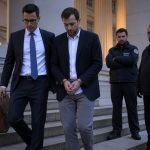
Authorities quickly identified Tyler James Robinson as the suspect and charged him with aggravated murder and related counts, with prosecutors seeking the death penalty given the alleged premeditation and the risk posed to hundreds of attendees. The case has moved forward through a preliminary hearing and now faces trial, and the state is treating this as one of the gravest political killings in recent memory.
From the beginning, law enforcement maintained they believed Robinson “acted alone,” a conclusion many on the right accepted as the most straightforward reading of the evidence rather than indulging wild conspiracy theories. Still, prudence demands we watch the process closely — an act this heinous begs for full accountability and clarity, not partisan shortcuts.
Yet defense filings and court records have raised serious forensic questions that deserve attention from any fair-minded observer: lawyers contend the bullet recovered at autopsy could not be positively matched to the rifle authorities tied to Robinson, and there have been contentious exchanges over DNA and other evidence. Those discrepancies don’t exonerate anyone, but they do underline why every piece of evidence must be scrutinized in open court before the public accepts a tidy narrative.
Prosecutors assert a political motive, saying Robinson targeted Kirk because of his public views and even quoting messages suggesting the shooter “had enough of his hatred,” a chilling reminder that ideological rage can metastasize into deadly action. If politics motivated this killing, it’s further proof that demonizing opponents corrodes the civic culture and invites tragedy — both sides should reject that path immediately.
As conservatives, we should demand two things at once: justice for Charlie Kirk and a rigorously fair legal process for the accused. We must press for the strongest possible protections for campus safety and for the right to speak without fear, while insisting that prosecutors prove every contested fact beyond a reasonable doubt in court.
This case is a wake-up call to hardworking Americans who still believe in free debate and the rule of law: reject the normalization of political violence, hold accountable anyone who plans or enables it, and refuse to let partisan theatrics short-circuit the truth. Our republic depends on both the fierce defense of free speech and the steady, unflinching pursuit of justice.