admin
admin
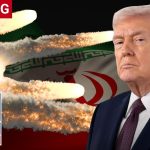
President Donald Trump says he called off a planned U.S. military strike on Iran and that a fresh round of talks was set to begin Monday. He made the claim on Air Force One and on Truth Social, saying Gulf partners and Tehran asked for more time and that a deal was now possible. This is the latest twist in a long run of clashes, claims and shuttle diplomacy over the Strait of Hormuz and Iran’s nuclear program.
Trump: “Locked and loaded” — then he stood down
Mr. Trump described the paused operation in blunt terms, saying U.S. forces were “locked and loaded” and that the strike would have been huge — his words, not mine: the biggest since World War II. He says he held back because Saudi Arabia, the UAE and others asked for more time and because Iran indicated it wanted to negotiate. The president framed the talks as about reopening the Strait of Hormuz and pushing Tehran toward denuclearization. U.S. envoys and advisers have been involved in these channels, and regional mediators from Qatar, Oman and Pakistan continue to help shuttle messages.
Why a pause matters — strategically and economically
The Strait of Hormuz is not trivia. A lot of world oil goes through that waterway. If shipping stays blocked or insurance rates spike, markets react fast. So a deal that truly reopens Hormuz would calm markets and lower risk for global commerce. From a conservative standpoint, negotiating from strength is the smart play: you threaten action, you let the other side know you mean it, then you take a real deal if it delivers results. Better to win terms than to decide the cost of a war with no plan for the day after.
But don’t pop the champagne — Tehran is sending mixed signals
Tehran has not bowed. Iran’s foreign ministry spokesman has said the strait “will in no way return to the status it was before” and has made clear some demands — like keeping uranium and missile issues — are non-negotiable. And other reporting shows Tehran and Washington sometimes disagree about whether the same level of talks is actually scheduled. In short: the president announced a pause and a meeting. That is news. It is not yet a signed, verified breakthrough. Talk is cheap unless both sides produce a clear readout.
Bottom line: if President Trump has genuinely bought a real, enforceable path to reopen the Strait of Hormuz and to roll back Iran’s nuclear threat, that is a win for peace and for the global economy. If it’s just smoke-filled diplomacy with no verification, the “locked and loaded” option will still be on the table. Watch for official White House and Iranian readouts, confirmation of attendees, and immediate market moves. Until then, cautious optimism — and a demand for real terms — is the only responsible stance.