admin
admin
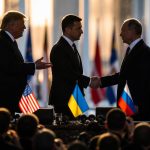
President Donald Trump walked into the G7 working session this week and summed up the moment with a grin and three words: “I’m the boss.” That short, viral line got the headlines. But the real news was what he carried with him — a U.S.-Iran memorandum of understanding meant to extend a ceasefire, reopen the Strait of Hormuz, and buy time to settle nuclear and missile questions. The G7 gave cautious backing, Ukraine got fresh pledges, and Washington moved a major diplomatic pawn across the table. Critics will gasp at the style. Conservatives should judge the results.
The “I’m the boss” moment — optics and reality
The camera caught the quip, the room laughed, and the White House circulated the clip like a campaign ad. The media treats that as the story. Fine. Leadership has a face and a voice. Sometimes a blunt line tells allies and rivals more than three pages of fine print. That said, the joke wasn’t a substitute for policy. The MOU was on the table, and the summit folded around it. If being the boss means getting allies to publicly support a plan to keep oil flowing and stop war from widening, I’ll take the theatrics.
What the Iran MOU actually says — limited, conditional, and fixable
The draft MOU runs through about 14 points. It sets a 60-day window to hammer out outstanding nuclear and missile issues. It links phased sanctions relief to verifiable steps, it lays out plans to reopen the Strait of Hormuz, and it offers reconstruction incentives if Tehran follows through. President Trump made clear the deal is conditional — and blunt about enforcement, saying if Iran “doesn’t behave, we’ll go right back to dropping bombs right smack in the middle of their head.” Call it crude. Call it clear. Either way, firmness is part of deterrence. The hard work starts now: verification, who pays for mine-clearing, and how sanctions are lifted or snapped back.
G7 backing, Ukraine, and the test of allied unity
The G7 issued a joint statement welcoming the framework while urging rapid, transparent follow-up. Leaders agreed to help with mine clearance and maritime security to reassure shipping. They also pledged more aid and sanctions pressure on Russia — and President Volodymyr Zelenskyy was in the room pressing Kyiv’s needs. That mix of diplomacy, military readiness, and economic pressure is exactly what a serious alliance should do. Yet the summit also showed strains: some leaders warned privately, India grumbled about strikes on Indian-crewed ships, and a few Europeans still need convincing to pull heavy lifts. Unity matters. So does action.
Why this matters — leverage, stability, and American leadership
This deal is not a final peace treaty. It is a tightrope. If enforced, it can stop a wider war, keep oil markets steady, and give the West leverage over Iran and Russia. If it unravels, the fallback is clear: punishment and pressure. Critics who fixate on theater over substance miss the point. Diplomacy often starts with a rough sketch, then gets detailed in negotiation. President Trump brought both showmanship and a hard edge to the table. Conservatives should demand tough verification and swift follow-through. And for anyone who hated the “I’m the boss” line — hey, better that the boss shows up with a plan than that the room closes with no plan at all.