admin
admin
The Pentagon says U.S. forces carried out a big, precise strike inside Iran after Tehran attacked commercial ships in the Strait of Hormuz. CENTCOM announced more than 80 targets were hit, and Tehran immediately vowed a retaliation. This is the latest flare-up in a monthslong clash that has put ships, bases and global energy markets on edge.
CENTCOM: U.S. strikes hit more than 80 targets
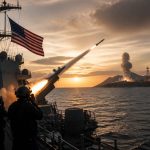
CENTCOM publicly stated that American forces struck “over 80 targets” inside Iran. The military listed air‑defense systems, command-and-control nodes, coastal radar, anti‑ship missile sites and more than 60 IRGC small boats near the Strait of Hormuz. CENTCOM said the strikes used precision munitions and were meant to “degrade Iran’s ability to continue attacking international commerce.” This action, the command said, was a direct response to recent Iranian attacks on commercial vessels that violated the ceasefire understanding.
Iran’s claims, U.S. caution, and who approved it
Iran’s Islamic Revolutionary Guard Corps and state outlets quickly claimed they hit dozens of U.S. targets in Bahrain and Kuwait and even said they shot down a U.S. MQ‑9 drone. Those Iranian claims are being reported by Iranian media but remain unverified by U.S. or allied officials. Axios reported an unnamed U.S. official saying President Donald Trump approved the strike plan; the Pentagon and CENTCOM remain the public sources for the U.S. account. In short: CENTCOM confirms the U.S. strikes; Tehran’s counterclaims should be treated as government assertions until independent proof appears.
Economic ripple effects and regional risk
Washington also moved to revoke a Treasury general license that had allowed limited Iranian oil sales under the interim deal. Markets reacted and oil benchmarks jumped on the news. Nearby countries activated air‑defense alerts and took steps to protect bases and shipping. The risks are real: every blow traded in the Gulf raises insurance costs, slows commerce and gives hostile actors more room to stir trouble.
Make no mistake: this was a decisive U.S. military reply after Iranian attacks on civilian shipping. Conservatives who have been tired of empty warnings should welcome a clear line being drawn. That said, the fight is not over and the region can still spiral. The White House, Secretary of Defense Pete Hegseth and CENTCOM Commander Admiral Brad Cooper need to keep facts front and center while holding the line — and not let rhetoric outrun verification. Tough action without sloppy claims is the only path to lasting deterrence here.